![[DEV] SC Policy Council](https://assets.nationbuilder.com/themes/64c02d01e8919c40538c4526/attachments/original/1677010541/logo-sc_policy.png?1677010541)


South Carolina ranks 43rd in the U.S. in K-12 public education performance. It’s no surprise, then, that the South Carolina Policy Council’s recent poll found 47% of residents are dissatisfied with K-12 public education.
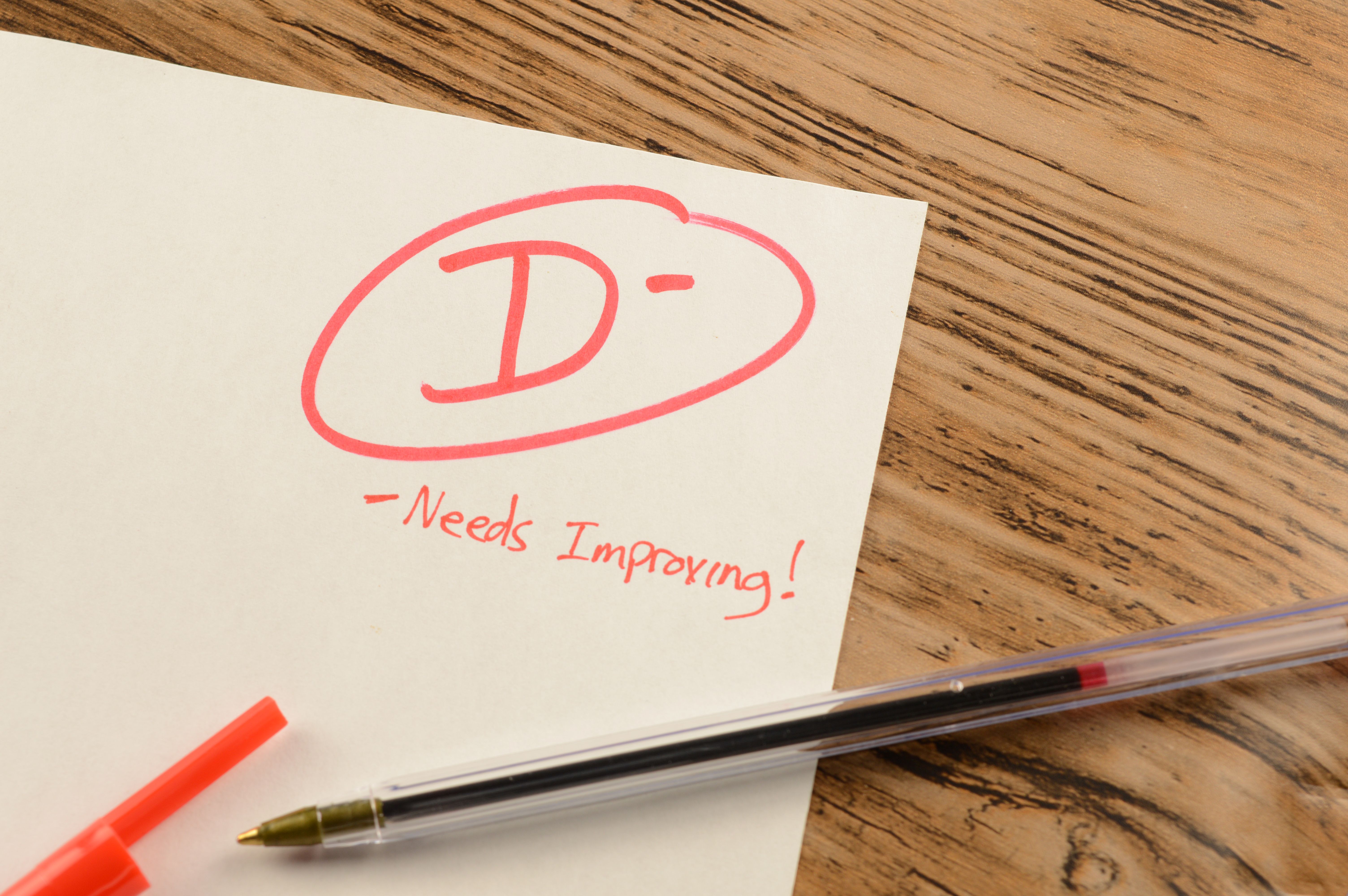
We also found that 51% of S.C. voters support legislation prohibiting public schools from adopting grading floors—policies that mandate the minimum grade teachers can give to students for incomplete or low-quality work (e.g., 50% when a 38% was achieved).
There is no single, statewide grading-floor policy. Some school districts, for example, will notify a parent if their child’s actual grade is below the grade floor (e.g., 50% on the report card but the actual score is 38%), while others do not. Some districts have grade floor set as low as 25% or as high as 60%, with others having no floors.
These inconsistencies uncover a glaring hole in the S.C. Department of Education’s (SCDE) Uniform Grading Policy (UGP), which allows schools to bypass the UGP through grading floors. The inability of the SCDE to intervene has effectively permitted grading floors to proliferate over time in local districts statewide.
Although it’s unclear when grading floors were first introduced, their surge in popularity coincides with new federal education guidelines signed in 2015 by then-President Obama, which took effect before the 2017-18 school year.
According to an unauthored presentation on grading floors given to Greenville County Schools—the state’s largest K-12 school district— only four S.C. middle schools were known to have grading floors before 2016. By the start of the 2016-17 school year, at least 19 SC middle schools had formal grading-floor policies, while an untold number of districts had adopted unwritten grading floors, as noted in the presentation.
Today, the lack of attention by SCDE—coupled with many schools or districts failing to make their handbooks easily accessible online—makes it hard to know exactly how many schools have grading floors.
Supporters of grading floors say the traditional 100-point grading system hurts struggling students, with a single “0” being the make-or-break for their final grade, while critics say it incentivizes children to do the bare minimum.
Do grading floors work?
A recent report on the state of education in North and South Carolina, titled Carolinas at Risk and published by the Carolinas Academic Leadership Network (CALN), highlights a worrying relationship between students’ test scores and graduation rates.
The S.C. End-of-Course Examination Program (EOCEP) is a standardized test used to measure middle student performance in algebra, biology, English, and U.S. history. EOCEP scores saw a sharp decline between 2016 and 2018, coinciding with the surge in schools adopting grading floors. Scores experienced a further drop in 2021 following the COVID-19 lockdown. Although scores have slightly recovered from their lockdown lows, they remain well below pre-2016 levels.
Yet the decline in student performance is not reflected in graduation rates. State graduation rates have increased from 74% during the 2010-11 school year to 82.2% in 2019-20. In their analysis, CALN notes that grading floors risk echoing the 1983 report from the Reagan Administration titled A Nation at Risk, which warned of inflated metrics potentially masking a national decline in educational rigor.
Some experts contend that grading floors improve learning outcomes, but the mismatch of rising graduation rates with falling test scores suggests the average student is leaving school less prepared than he or she was a decade ago.
Addressing the issue
Last year, a survey conducted by the Sumter County School District found that more than 8 out of every 10 teachers in the district opposed their grading floor, which led to the school board removing it in a 5-3 vote.
This past spring, despite a decade of test score data and an overwhelming consensus among district teachers, the Sumter County school board tried to reinstate a 50% grading floor. In turn, S.C. Sen. Jeff Zell, R-Sumter, a former Sumter County school board member who helped end the district’s grading floor during his tenure, sponsored a bill to prohibit grading floors statewide and limit state funding to those school districts that don’t comply.
Leaders in the statehouse need to take up Sen. Zell’s bill to protect children in public schools from rogue school boards and help change the state’s abysmal 43rd-place ranking.
This report may be republished in whole or in part, provided that proper credit is given to the author(s) and the South Carolina Policy Council.