![[DEV] SC Policy Council](https://assets.nationbuilder.com/themes/64c02d01e8919c40538c4526/attachments/original/1677010541/logo-sc_policy.png?1677010541)


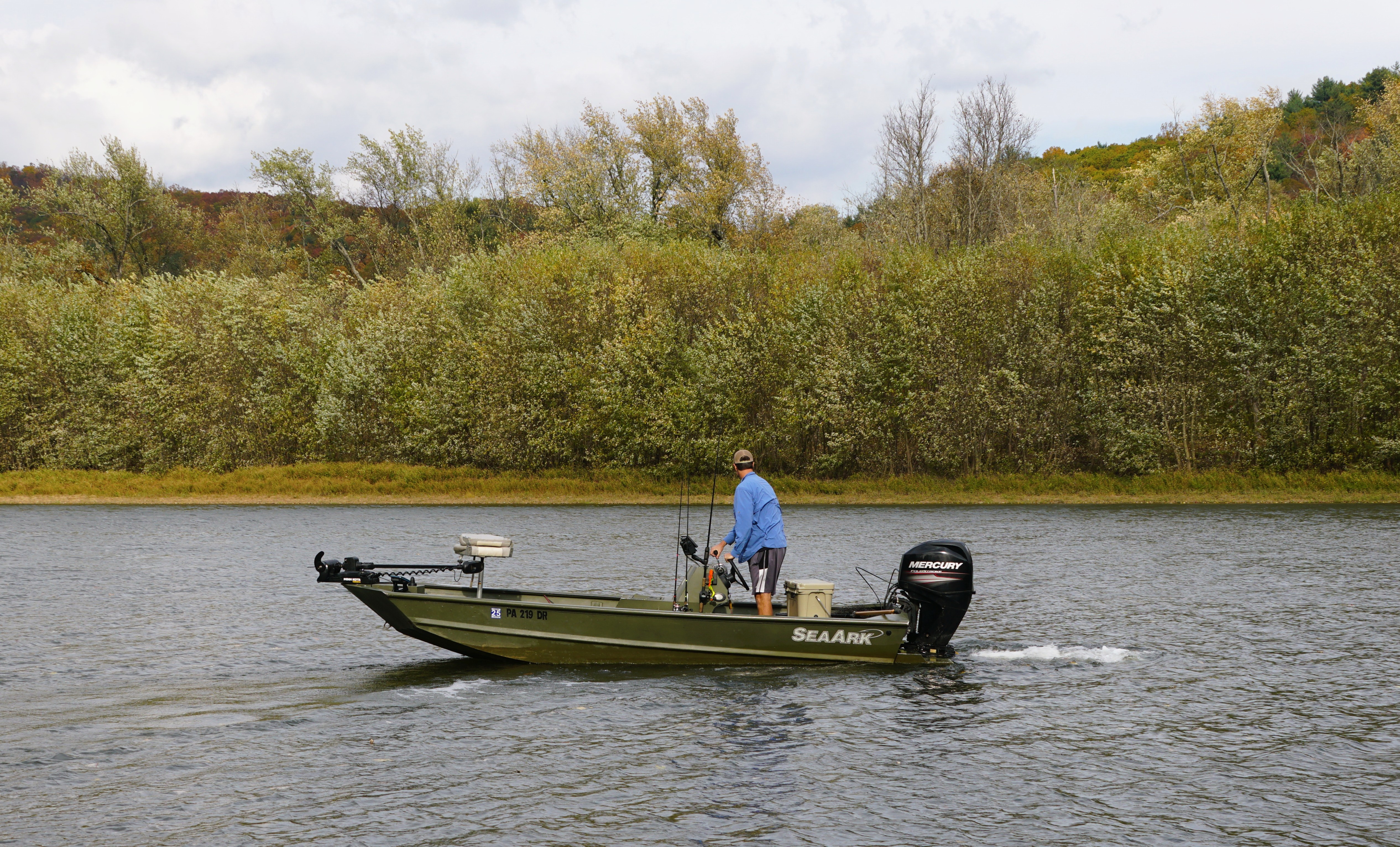
The state of South Carolina has a disproportionately high tax rate on boats compared to other property such as homes and cars. However, S.C. boat owners may finally be seeing meaningful tax relief as H.3858 has been signed into law by Governor McMaster.
Background
The current assessment ratio of 10.5% gives S.C. the highest boat property taxes in the entire Country according to the South Carolina Boating & Fishing Alliance (SCBFA). Boat owners must also title both the outboard motor and the watercraft itself, effectively resulting in double taxation.
This can largely be attributed to the state’s strict limits on property taxes for owner-occupied homes. They face an assessment ratio of just 4% and are exempt from the school operating millage, or the amount of property tax payable per dollar of the assessed value of that property. Consequently, counties have been compelled to shift the tax burden to vehicles and other types of property, such as boats.
SCBFA’s president and CEO, Gettys Brannon, points out that as a result of these policies, “Nearly 80% of (boats worth more than $120,000) now are registered out of state.”
What does the bill do?
H.3858 brings relief to boat owners in several ways.
Most notably, it exempts 42.8571% of the fair market value (FMV) of a watercraft, phased in over three years. Therefore, 14.2857% is exempt in tax year 2027, and 28.5714% is exempt in tax year 2028.
In exempting 42.8571% of the FMV of a boat from the property tax, the current 10.5% assessment ratio is effectively lowered to 6% (by tax year 2029).
Five counties – Beaufort, Dorchester, Florence, Hampton, and Horry – currently have property tax exemptions in place that already bring the assessment ratio down to an effective 6%, but the bill specifies that the exemptions cannot be combined. These will be removed when the bill takes effect in 2027.
The bill also removes the requirement to title an outboard motor, allowing an auditor to combine a boat and outboard motor on one property tax notice which eliminates double taxation. However, outboard motors of at least five horsepower are now required to be registered. This means that while boats and motors will be considered a single taxable item, the state will still require each motor to have an identification number.
Currently, the state charges $20 to register and title a new boat and $10 for a new motor title. The bill alters these fees slightly, decreasing the $20 boat fee down to $10 and adding a $10 motor registration fee (as titling is no longer required). The bill outlines how these fees will be allocated by the Department of Natural Resources (i.e. for law enforcement responsibilities or administering the bill’s provisions).
Additionally, marine dealers who sell watercraft are allowed nine demonstration numbers, while dealers who only service watercraft/outboard motors are allowed one demonstration number. A demonstration number is essentially a dealership plate for boats, allowing dealers to test drive their watercraft when not officially registered to that dealer/service provider.
Fiscal impact
Due to the 42.8571% FMV property tax exemption for watercraft, it is estimated by the S.C. Revenue and Fiscal Affairs Office (RFA) that $51,443,000 in property tax revenue will be forgone beginning in tax year 2029 upon full implementation of the exemption. As this exemption will be phased in over three years, the estimated property tax decrease (for all millage) is expected to be $12,863,000 and $25,721,000 in tax years 2027 and 2028 respectively.
To offset this forgone tax revenue, the RFA anticipates that counties will increase millage rates within the allowable limits.
If nearly 80% of these high value boats are indeed registered out of state, and the bill is successful at bringing some or most of this lost cash back to S.C., it can be reasonably inferred that the fiscal impact will not be as severe as the RFA is estimating. Although, this currently cannot be accurately projected.
With Governor McMaster signing H.3858 into law, the provisions of the bill go into effect on January 1, 2027.
Ethan Brawer is a research intern for the South Carolina Policy Council.
This report may be republished in whole or in part, provided that proper credit is given to the author(s) and the South Carolina Policy Council.